How Coal Pollution Undermines Solar Energy: A Data-Driven Investigation
What You Need to Get Started
Before diving into the analysis, gather these essentials to understand how coal-derived aerosols cut into solar power generation:
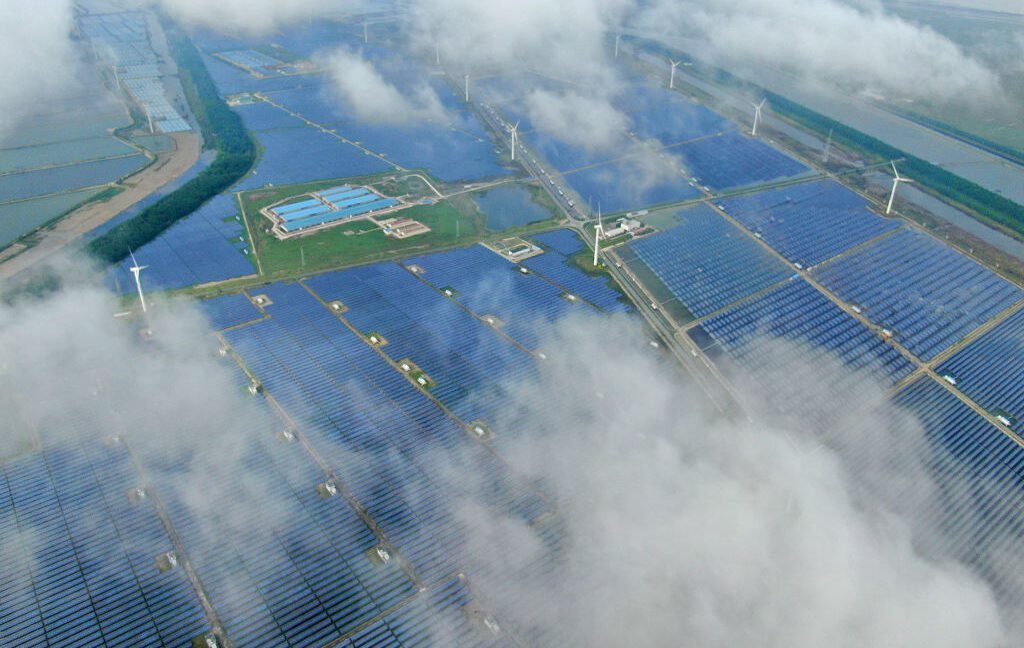
- Basic knowledge of aerosol pollution – sulfur dioxide, nitrous oxides, and particulate matter from coal combustion.
- Access to solar facility inventories – public datasets or satellite imagery (e.g., from NASA or ESA).
- AI image analysis tools – for automated recognition of solar panels in satellite photos.
- Crowdsourced location records – community databases or open-source projects like OpenSolarMap.
- Weather and irradiance data – historical records of solar radiation and atmospheric conditions (e.g., from NOAA or Copernicus).
- Computational platform – Python/R with libraries for geospatial and time-series analysis.
- Optional: health impact metrics – cost-of-illness or mortality data for co-benefit calculations.
Step-by-Step Guide
Step 1: Map Coal Emission Hotspots
Identify regions with high coal combustion – power plants, industrial boilers, residential heating. Use global emission inventories like EDGAR or CAMS. Focus on aerosols that scatter sunlight: sulfates, nitrates, organic carbon. These particles form a haze that reduces the amount of direct sunlight reaching solar panels.
Step 2: Quantify Aerosol Optical Depth (AOD)
AOD measures how much light aerosols block. Obtain satellite-derived AOD data from MODIS or VIIRS. For each coal region, calculate average AOD during peak solar hours (10 AM – 2 PM). Higher AOD correlates with greater solar attenuation. Note: AOD is a unitless number; typical values over coal areas can exceed 1.0, compared to ~0.1 in clean air.
Step 3: Gather Solar Facility Data
Build a global inventory of solar installations – utility-scale farms and rooftop arrays. Use known registries (e.g., IEA PVPS) supplemented by AI analysis of satellite imagery. For example, train a convolutional neural network to detect solar panels in 0.5 m resolution images. Cross‑reference with crowdsourced platforms (e.g., OpenStreetMap tags) to verify locations and size.
Step 4: Estimate Theoretical Solar Output
Convert facility area and local irradiance to potential power. Use the formula: Power (kWh) = Area × Global Horizontal Irradiance × Panel Efficiency × Performance Ratio. Assume typical efficiency (15–20%) and a performance ratio of 0.75. This gives the energy the facility would produce in clean conditions.
Step 5: Account for Aerosol-Induced Losses
Adjust the theoretical output by the AOD reduction factor. Aerosols decrease direct beam radiation more than diffuse radiation. Use radiative transfer models (e.g., SMARTS or simple empirical relationships) to compute the percentage loss. For a given AOD, the loss can be 10–30% on hazy days. Multiply the theoretical output by (1 – loss fraction) to get actual generation.
Step 6: Aggregate Losses Over Time and Space
Apply the loss calculation to each facility for every hour of the year, using historical weather data. Sum the differences (theoretical minus actual) across all facilities to find total lost terawatt‑hours (TWh). The UK team’s study estimated hundreds of TWh annually, showing that coal aerosols significantly undercut solar’s potential.
Step 7: Link to Health and Economic Co-Benefits
Recognize that reducing coal pollution not only boosts solar output but also improves public health. Use standard metrics (e.g., disability‑adjusted life years) to quantify avoided mortality from air pollution. The health savings typically exceed the cost of replacing coal with renewables, making the case for cleaner air even stronger.
Tips for a Clearer Analysis
- Use high‑resolution data – coarse satellite pixels may miss small rooftop arrays. Fuse multiple sources to improve accuracy.
- Account for seasonal variability – coal burning may spike in winter (heating) while solar irradiance drops. Adjust your time window accordingly.
- Validate with ground measurements – compare your AOD‑based losses to actual pyranometer readings at a few reference sites.
- Consider future scenarios – project how planned coal phase‑outs (or expansions) will change aerosol loads and solar potential.
- Communicate uncertainties – AOD retrieval errors, panel degradation, and varying sky conditions affect results. Always report confidence intervals.
- Include policy implications – your numbers can support arguments for retiring coal plants faster. Pair with cost‑benefit analysis for decision‑makers.
Related Articles
- 10 Key Insights Into Leapmotor's Strategic Expansion Into Europe and Global Markets
- Kia Slashes EV6 Pricing by Up to $6,000 in US Market
- UK Avoids £1.7bn in Gas Imports Thanks to Record Wind and Solar Output Since Iran Conflict Began
- Canada Emerges as Prime Target for Chinese EV Giants, Experts Say
- Lessons from the 1970s Oil Shocks: What a Strait of Hormuz Blockade Means for Global Energy
- Electric Trucks Achieve Profitability as Diesel Declines, CEO Confirms
- Bridging the Gap: Why Climate Action Falters Despite Strong Public Support – A Practical Guide
- Balcony Solar Boom Defies Trump’s Fossil Fuel Push, Reshaping Energy Access