China's Hanyuan-2 Dual-Core Quantum Computer Sparks Debate: 200 Qubits, but Where Are the Benchmarks?
Breaking News: Hanyuan-2 Dual-Core Quantum Computer Unveiled
The Chinese Academy of Sciences (CAS) affiliate CAS Cold Atom Technology has unveiled what it claims is the world's first dual-core quantum computer, the Hanyuan-2. The device boasts 200 qubits and extraordinary power efficiency, yet experts are sounding alarms over the absence of verified performance benchmarks.
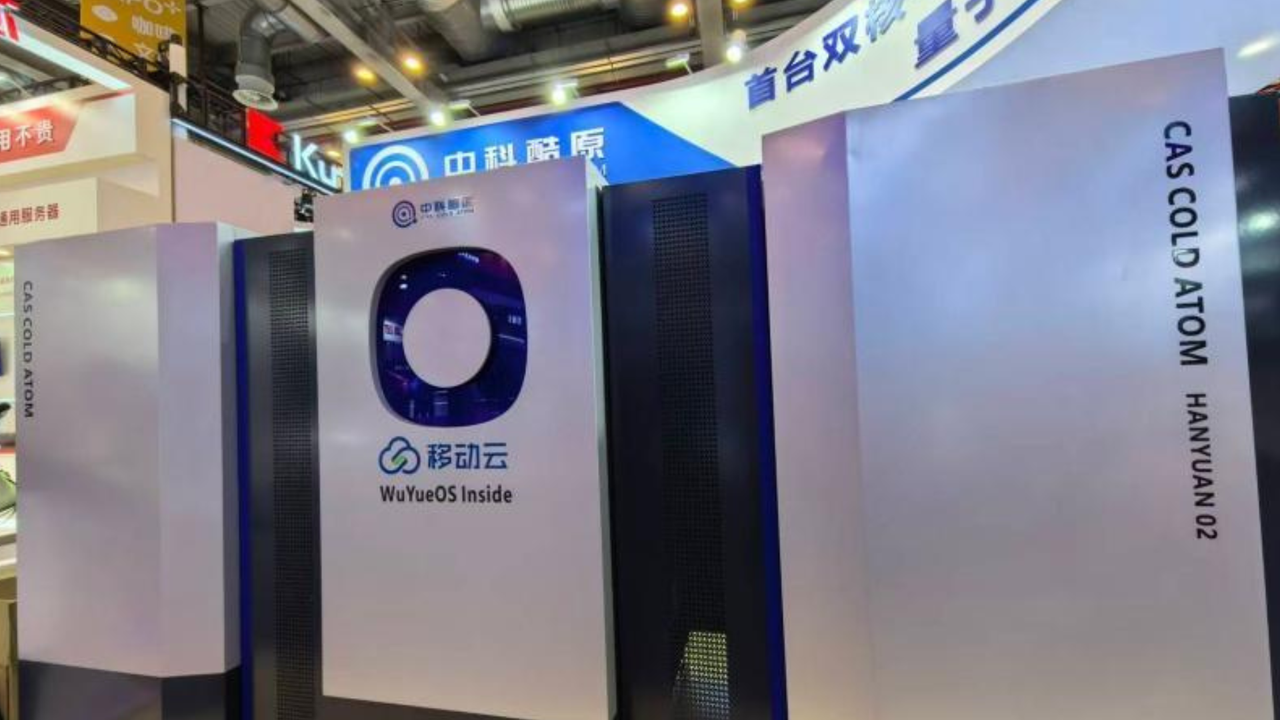
“Without independent third-party benchmarks, we cannot evaluate whether this system truly outperforms existing quantum processors,” warns Dr. Li Wei, a quantum computing researcher at the University of Science and Technology of China, who was not involved in the project. “Claiming the 'first dual-core' is meaningless if we don't know the gate fidelity or error rates.”
Key Specifications and Claims
The Hanyuan-2 integrates two 100-qubit processors on a single chip, enabling parallel quantum operations. CAS Cold Atom Technology states this design slashes power consumption by up to 60% compared to single-core alternatives.
However, the company has released no published data on gate fidelity, coherence times, or quantum volume—metrics essential for comparing quantum computers. “In quantum computing, qubit count is just one number. Without error rates, high qubit counts can mean nothing,” notes Dr. Sarah Chen, a quantum hardware analyst at the Qubit Research Institute in Beijing.
Background
CAS Cold Atom Technology, based in Wuhan, is a spin-off of the Chinese Academy of Sciences. Its previous Hanyuan-1 machine achieved 100 qubits using cold atom technology, a method that traps atoms with lasers to serve as qubits.
The race to build practical quantum computers has intensified globally. While IBM and Google have demonstrated systems with hundreds of superconducting qubits, China has been investing heavily in diverse architectures, including cold atoms and photonics.
The dual-core approach is novel, but skeptics argue it may be a marketing term. “There is no standard definition for a 'core' in quantum processors. This could be a classical computing analogy that doesn't hold up,” cautions Dr. Michael Zhang, a quantum physicist at Tsinghua University.
What This Means
If the Hanyuan-2's power efficiency claims are verified, it could accelerate the deployment of quantum computers in data centers facing energy constraints. However, without formal benchmarks, the system remains a curiosity.
The announcement underscores the widening gap between public relations and scientific validation in the quantum computing field. “We need the quantum community to insist on standard benchmarks, like the industry does for classical chips,” states Dr. Chen. “Otherwise, these machines risk being just expensive toys.”
For China, the Hanyuan-2 signals a continued push to lead in quantum technology, even as the global community waits for evidence of practical advantage.
Related Articles
- 5 Crucial Insights from the Colombia Summit: Is a Fossil Fuel Exit Finally in Sight?
- 7 Key Insights into How Anion Exchange Boosts CO₂ Capture in Polyionic Liquids
- Starship V3's Self-Inspection: What Makes Flight 12 Unprecedented?
- Bringing Light to Rural Cameroon: How IEEE Smart Village and a Local Entrepreneur Are Powering Change
- How Young Gut Bacteria Reversed Liver Aging in Mice: A Promising Study
- Kimchi Probiotic Shows Promise in Removing Microplastics from Human Body, Study Finds
- 8 Things You Need to Know About the April 2026 Python Environments Update
- How to Build a Video World Model with Long-Term Memory Using State-Space Models