Mastering GitHub Copilot CLI: Interactive vs Non-Interactive Mode Step-by-Step
By
Introduction
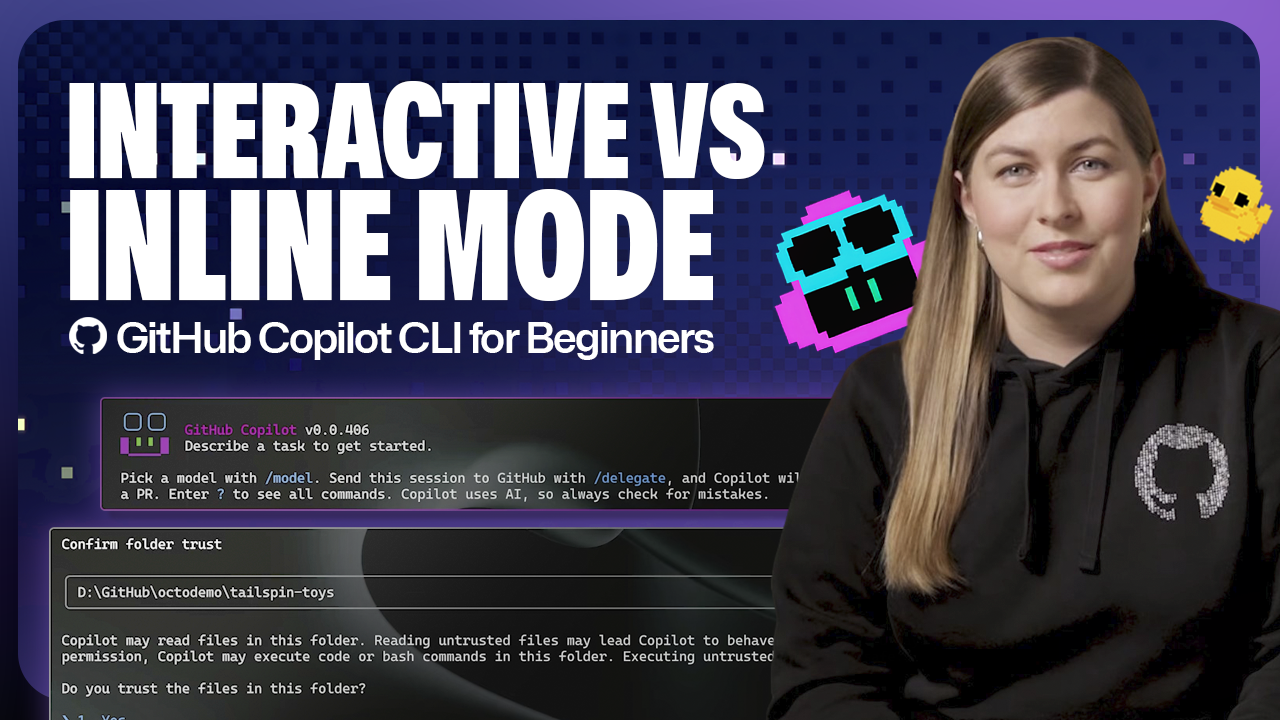
GitHub Copilot CLI is a powerful tool that brings AI-assisted coding directly to your terminal. Whether you're exploring a new codebase or need a quick snippet, Copilot CLI offers two distinct ways to interact: interactive mode (a chat-like session) and non-interactive mode (a one-shot prompt). This guide walks you through both modes step by step, helping you choose the right approach for any task.
What You Need
- A GitHub account with an active Copilot subscription (Individual, Business, or Enterprise)
- GitHub Copilot CLI installed on your machine (see the official installation guide)
- A terminal or command prompt
- Basic familiarity with command-line navigation
Step-by-Step Instructions
Step 1: Launch Interactive Mode
- Open your terminal.
- Type
copilotand press Enter. By default, you enter interactive mode — a back-and-forth chat environment. - The first time you run Copilot in a directory, it may ask for permission to read and modify files. Type
yto trust the folder. This is required for Copilot to analyze your project.
Step 2: Ask Questions in Interactive Mode
- Once inside the Copilot session, type a question like How do I run this project locally?
- Copilot will analyze your project files and provide step-by-step instructions. You can read the answer and follow along.
- If you need more details, ask follow-up questions (e.g., What dependencies are required?). The session remembers context, so you can iterate naturally.
Step 3: Let Copilot Execute Commands (Optional)
- After seeing instructions, you can ask Copilot to run them automatically: Can you run it for me?
- Copilot will execute the necessary commands (e.g., installing packages, starting the server) and show you the output.
- This is useful for hands-off exploration, especially when you're not sure about the exact commands.
Step 4: Exit Interactive Mode
- When you're done with the session, type
exitor press Ctrl+C to return to your regular terminal. - Interactive mode is ideal for complex, multi-step tasks where you want to refine your approach as you go.
Step 5: Enter Non-Interactive Mode
- From your regular command line (not inside a Copilot session), type:
copilot -p "your prompt". The-pflag stands for prompt and enables non-interactive mode. - For example:
copilot -p "Quickly summarize what this repository does and list the key folders" - Press Enter. Copilot processes the prompt once and returns an answer immediately, without opening a persistent session.
Step 6: Use Non-Interactive Mode for Quick Tasks
- Non-interactive mode shines for one-off requests: generating code snippets, checking documentation, or automating repetitive tasks in scripts.
- Because there's no session overhead, you get answers instantly and can stay in your shell workflow.
- Example:
copilot -p "Write a Python function to reverse a string"— the output appears right in your terminal.
Tips for Success
- Choose mode wisely: Use interactive mode when you need to explore or debug iteratively. Use non-interactive when you know exactly what you want and just need a quick answer.
- Trust folder prompt: Always grant folder trust when prompted; without it, Copilot cannot read your project files.
- Combine modes: Start with non-interactive to gather information, then switch to interactive for deeper investigation.
- History matters: Interactive mode retains conversation history within the session, allowing you to refine your queries naturally.
- Automation ready: Non-interactive mode can be easily integrated into shell scripts and CI/CD pipelines for automated code generation.
With both modes at your disposal, you can handle everything from casual exploration to focused, fast queries — all from the command line. Happy coding!

Tags:
Related Articles
- Birdfy Smart Feeders Hit Record Low Prices Just in Time for Mother’s Day
- Understanding Log Detective in Packit: Automated Build Failure Analysis
- Gödel's Unknowable Math: A Cryptographer's Secret Weapon
- Docker Unveils AI Governance Platform to Tame Autonomous Agent Chaos
- Simulating Corona Performance and Electromagnetic Fields in High-Voltage Power Systems
- Breaking: Major Linux App Updates Arrive in April 2026 – Kdenlive, VirtualBox, Firefox 150 Lead the Charge
- Open Block Protocol Announced to Standardize Web Content Blocks
- 8 Surprising Lessons from Vibe Coding a Focus-Enforcing Chrome Extension with Claude